31 May 2026
Data Mesh: Decentralized Data Architecture
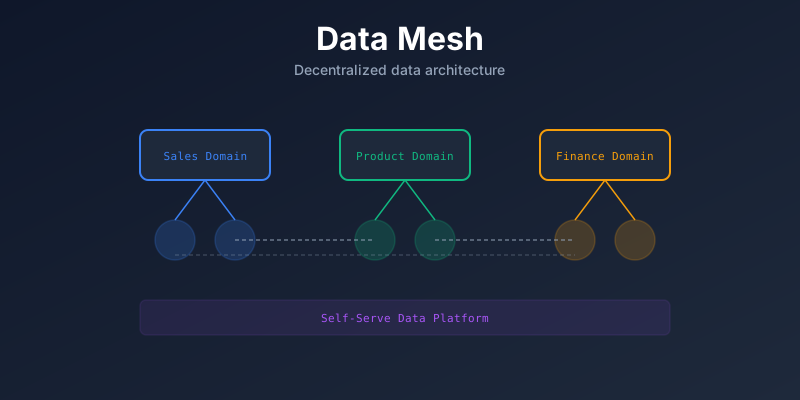
A practical overview of Data Mesh architecture, its four principles, and how it changes the way organizations manage analytical data.
Data Mesh is an approach to data architecture that moves analytical data ownership from a central data team to the domain teams that produce and know the data best.
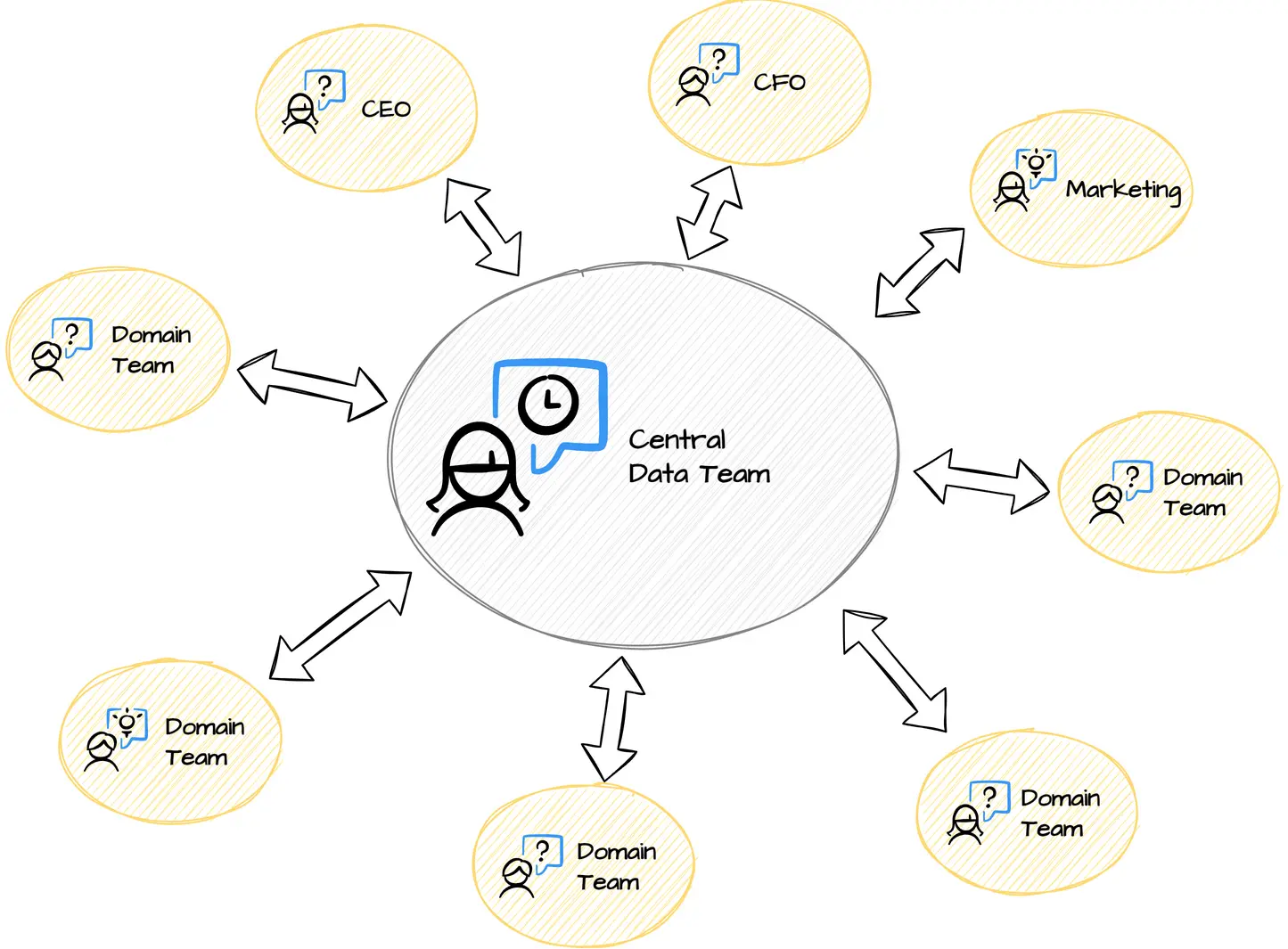
The Problem with Centralized Data
Most organizations have a central data team that manages a data lake or data warehouse. This team becomes a bottleneck because:
- They must learn every domain to provide useful insights
- Broken data pipelines consume most of their time
- They cannot answer analytical questions fast enough
- The more the organization grows, the worse it gets
What Is Data Mesh?
Data Mesh was coined by Zhamak Dehghani in 2019. It is based on four principles:
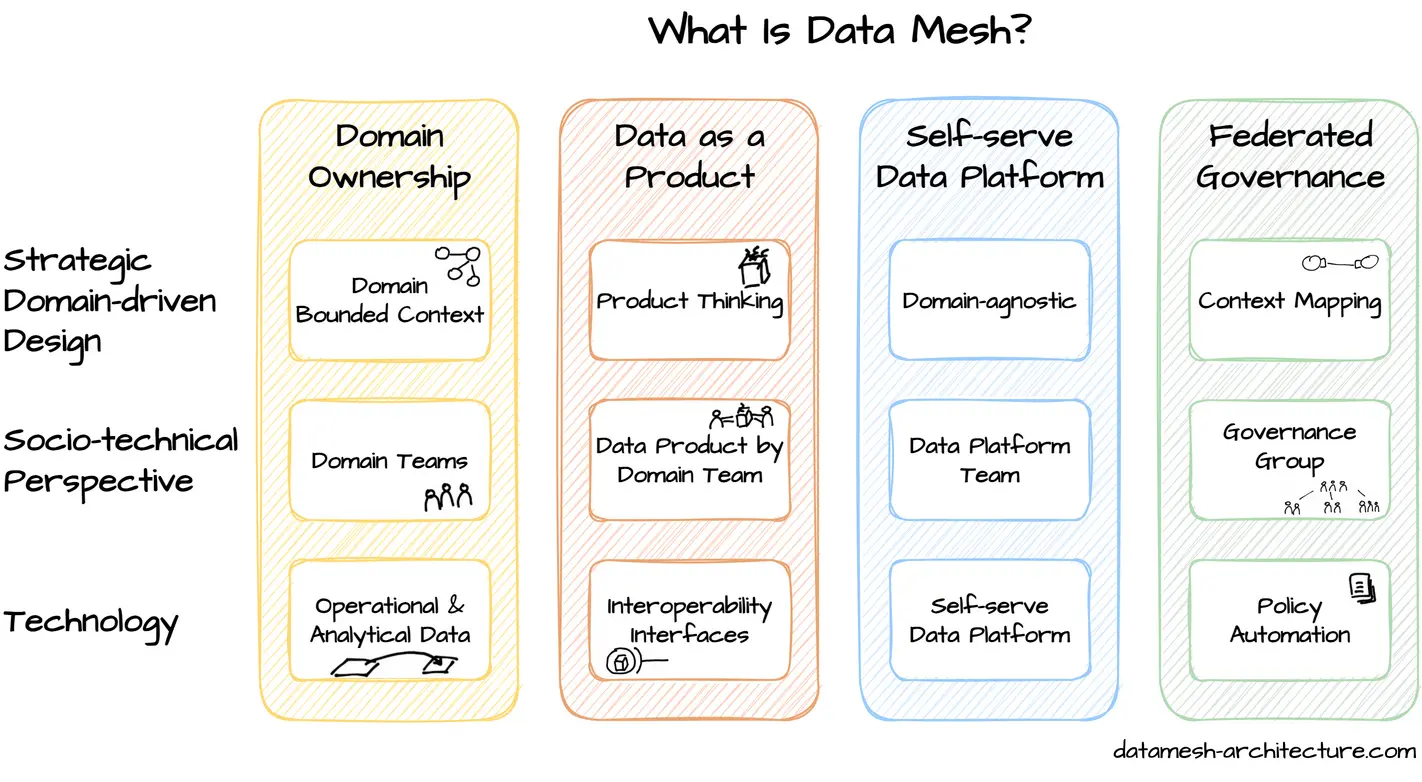
1. Domain Ownership
Each domain team owns its analytical data. The team that builds the orders microservice also owns and serves orders analytical data.
- Analytical data is organized by business domains, not by technology
- Domain teams know their data best
- No central team needs to learn every domain
2. Data as a Product
Domain teams treat their data like a product with real users:
- Discoverable — other teams can find it
- Understandable — clear documentation and schema
- Trustworthy — quality guarantees and SLOs
- Accessible — standard interfaces to consume it
- Interoperable — follows global conventions
3. Self-Serve Data Platform
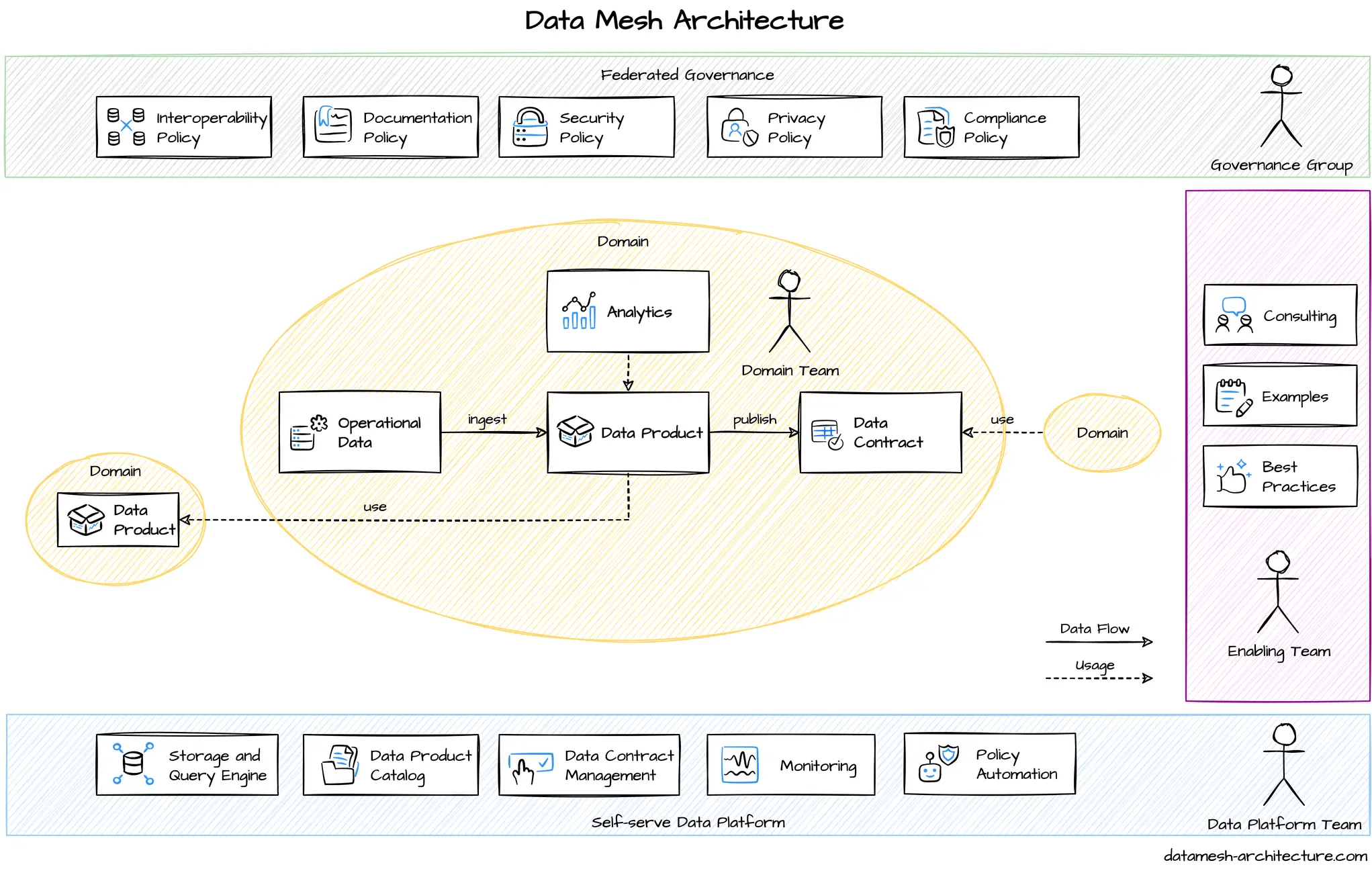
A platform team provides tools so domain teams can build data products without deep infrastructure knowledge:
- Storage provisioning (BigQuery, S3, Snowflake)
- Pipeline orchestration
- Data catalog and discovery
- Monitoring and observability
- Access control
4. Federated Governance
A governance group with representatives from all domains agrees on global standards:
- Interoperability — common formats and protocols
- Documentation — metadata standards
- Security — access control and PII handling
- Compliance — regulatory requirements
- Quality — SLOs and quality metrics
Key Concepts
Data Product
A data product is the core building block. It contains:
- Code — pipelines for ingesting, transforming, and serving data
- Data — the actual analytical data (tables, files, events)
- Infrastructure — compute and storage to run everything
Data products expose data through output ports (e.g., a BigQuery dataset, Parquet files on S3, Kafka topics).
Data Contract
A data contract defines the agreement between a data provider and its consumers:
- Schema and semantics
- Quality expectations (freshness, completeness)
- SLOs (availability, support)
- Terms of use
Data Mesh Architecture Overview
Domain Types
| Type | Description | Example |
|---|---|---|
| Source-aligned | Publishes data close to operational events | Orders, Payments, Shipments |
| Aggregate | Combines data from multiple domains | 360° Customer View |
| Consumer-aligned | Optimized for specific business needs | Management Reports, Marketing Analytics |
When to Use Data Mesh
Good fit:
- Multiple independent engineering teams (5+)
- Already using domain-driven design and microservices
- Need for cross-domain analytical insights
Bad fit:
- Small organization with one team
- Low-latency data requirements
- Happy with a monolithic integrated system
Common Tech Stacks
- Google BigQuery + Data Catalog
- AWS S3 + Athena + Glue
- Azure Synapse Analytics
- dbt + Snowflake
- Databricks
- Kafka + Streaming platforms
References
- Data Mesh Architecture — Jochen Christ, Larysa Visengeriyeva, Simon Harrer
- Data Mesh Principles — Zhamak Dehghani
- How to Move Beyond a Monolithic Data Lake to a Distributed Data Mesh — Zhamak Dehghani